
Wednesday, July 1, 2020


Tuesday, October 15, 2019
Why the New Joker Film Is No Laughing Matter
By

The new film, Joker, is much more than a simple film. The intensely violent and bloody blockbuster is a statement about what has gone wrong with our society. It is yet another symptom of a culture that has lost its way.
Some films inspire people to do great things. Others contain beauty and moral meaning. Joker is made to horrify. It proposes an anti-hero that is especially dangerous for our times.

It should not surprise us that most media have already delivered predictably favorable reviews of Joker. The film was made to overwhelm. Hollywood pulled out all the stops to make this film a blockbuster. We can expect to see the best talent on display. The great acting, directing or technical effects are the best that money can buy. The intense plot development is what happens when a high-budget comic-book-fantasy-turned-horror story is packed into 122 sensational minutes.
We can also expect to see an accommodating press ever ready to glorify the violence and create the hype around films that reflect the frenetic intemperance of our times. The film caters to an adoring public that craves sensations and thrills over everything. It all comes together in Joker.
A Dangerous Message
Thus, let us leave the reviewers to rave as is their custom. We cannot and do not want to add to their adulation. Our task is to consider what films like this mean for our society in crisis.
Help Remove Jesus Toilet Lid on Amazon
The appearance of Joker means we have a movie industry that is willing to send a dangerous message to the public.
The message is found in the plot of the story of a deranged young man working as an amateur clown. He is beaten, humiliated and rejected in a corrupt crime-infested Gotham City. His treatment by society leads him to seek revenge by murdering cruel businessmen and joining criminal elements. This young man becomes the Joker, the arch-criminal featured in Batman movies. The film is a psychological profile and an attempted explanation of how the Joker arrived at his level of depravity.
What makes the film so dangerous is that it highlights the same psychological profile found in many mass shooters that have terrorized America with their killings.
Satanic Christ Porn-blasphemy at Walmart — Sign Petition
The message is that any isolated person who considers himself society’s victim can become the Joker by following his dangerous narrative.
We do not need this message. The dangers are very real. Even Warner Brothers, the film’s producer, recognized the threat of violence by issuing a statement claiming the film was meant “to provoke difficult conversations around complex issues” not make the Joker a hero.
We do not need this conversation.
Law enforcement agencies nationwide were also well aware of the threat. They were on alert during the film’s opening weekend, just in case, some hidden “incel” loner might try to follow in the Joker’s footsteps. They know that ideas can have consequences.
How Panera’s Socialist Bread Ruined Company
A Dangerous Narrative
Thus, there arises a second major problem with Joker. The release means we have a media and culture that demonstrate a willingness to promote a dangerous and false narrative that favors a bleak world.
The film’s narrative tells confused young men how they might see themselves as victims of misunderstanding and uncontrollable circumstances. It mixes the class struggle poison of “Kill the Rich” rhetoric and action into the story. In the Joker’s world, problems are systemic, not moral. Revenge is justified and possible for all of the world’s victims. His is a nihilistic world devoid of meaning, free will and agency.
The Joker’s world has no good, truth or beauty. God has no role in this dark, twisted tale. In the words of Observer reviewer Rex Reed, the film represents “the soul of a monster in Hell, in a movie that borders on genius—repellant, dark, terrifying, disgusting, brilliant and unforgettable.”
This terrifying spectacle can belong to those who claim this narrative. It can serve as the warped model for those depressed and lonely youth that occupy the peripheries of our troubled society.
The Anti-Hero of an Anti-Culture
Someone should care about the tragic state of a culture that peddles these wares. However, no one seems to care.
While the Joker may not be “a hero,” he is an anti-hero of an anti-culture that is very much a product of postmodernity’s destruction of certainties. It is an anti-culture that cultivates horror. The film seeks to gratify our mania for sensations, even when they cause terror and fear.
Such films are toxic in today’s polarized climate. In the name of entertainment, they introduce self-absorbed characters that only intensify division and class struggle. They portray a brutal, broken and unintelligible society devoid of meaning and purpose.
Indeed, Joker represents everything that is not needed in today’s society. We need heroes that practice virtue. We need characters that can unify not divide society. There must be those who can overcome difficulties not dwell upon them. Self-absorbed characters do not build society, but destroy it.
It is not just Joker but a whole genre of entertainment that projects an image of life that appeals to all that is macabre, violent and egoistic.
Playing Out the Same Script
Worst of all, Hollywood treats such films as normal fare. The bloody violence and deranged plot are all dismissed as entertainment that has no impact on our world. The media insist that there is no connection even when the same script is played out in real life by lonely “jokers” who also live broken lives without family, structure or God.
Somewhere, the next shooter lives in dark isolation. We can only ask if Joker will not play some role in his descent into madness. Such a stern warning might seem exaggerated since it is only a movie. However, can we afford not to ponder the question?
Tuesday, August 13, 2019
This Is Why Woodstock 50 Was Just Canceled
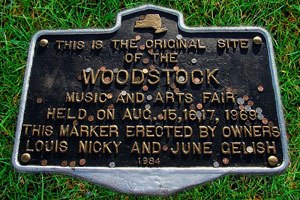
This Is Why Woodstock 50 Was Just Canceled
Of the rock festivals of the sixties, the Woodstock Music and Art Fair was by far the most famous. Held on a 600-acre dairy farm near Bethel, N.Y. on August 15–17, 1969, the festival is the iconic representation of the drug-addled culture and sexual revolution that upended American life. This August marks the fiftieth anniversary of the era-defining event. Some have called for celebrating with another concert.
The occasion is hardly a cause for celebration—so many of the cultural changes after Woodstock had catastrophic consequences. Most do not know that the concert was a disaster—even from an organizational point of view.
What Went Wrong
Everything that could have gone wrong did go wrong.
The organizers planned an event for 200,000 people. Nearly 400,000 people crashed the gates where they demanded and received free admission. Security fell apart. The highways were clogged with cars trying to get to the event. Heavy rains created a sea of mud that mixed with the promiscuity, drugs and marijuana that dominated the festival.
John Fogerty, from the rock group Creedence Clearwater Revival, described an early morning scene as “sort of like a painting of a Dante scene, just bodies from hell, all intertwined and asleep, covered with mud.”
Saving Woodstock
The “establishment” that the hippies condemned saved Woodstock. Professionals had already arranged to attract concertgoers by promising a star-studded cast that included Jimi Hendrix, the Who, Santana, the Grateful Dead, Janis Joplin, and the Jefferson Airplane. A sympathetic media turned the logistic and moral disaster into a hippie legend by repackaging the event as “three days of peace and music.” When order broke down, the government stepped in with personnel from nearby Stewart Air Force Base. They flew in performers and put men on the ground to keep things from descending into total disorder.
Help Remove Jesus Toilet Lid on Amazon
Capitalizing on Woodstock’s fiftieth anniversary, promoters hoped to recreate the “magic” of the original festival. It seems they only managed to recreate the disaster. As in 1969, everything has gone wrong. However, this time, the establishment did not come to the rescue. Even the media were nowhere to be found. Scheduled for August 16-18, Woodstock 50 was abruptly canceled on July 31.
Woodstock—A Symbol of What Went Wrong With the Sixties
Woodstock is symbolic of all that went wrong with the sixties. The mud fest of sex, drugs and music represented a cultural revolution that destroyed morals, customs and manners. What happened at Woodstock would later be mainstreamed across America so that today the radical behavior manifested there is generalized and accepted.
The atmosphere of nudity and indecency at the festival, for example, prefigured the destruction of modesty and propriety seen in today’s fashions. The unbridled passions unleashed at Woodstock pushed the envelope of what causes scandal so that today nothing seems to shock anymore.
However, the worst was the spirit of Woodstock that soon permeated everywhere. Its hippie generation fled from things that were reasoned, structured and systematized in favor of all that is spontaneous, carefree and impulsive. The civilization of the image and sensationalism replaced intellectual effort and abstract thought. People rejected discipline and restraint and called for an end to all rules.
Satanic Christ Porn-blasphemy at Walmart — Sign Petition
“It is forbidden to forbid!” shouted the student protesters at France’s Sorbonne University in 1968. Across the Atlantic on the trash-littered fields at Woodstock, a generation embraced an anything-goes culture where you could “do your own thing.”
The Woodstock Illusion
The myth of Woodstock claimed the event was all about a new age of freedom, love and peace. Without the restraints of Christian morals and social structures, people could “imagine” a perfect world and live together in harmony without property, authority and God.
However, as in all utopic fantasies, reality crashes through the illusions. A Woodstock world is a nightmare. Indeed, without courtesy and propriety, society becomes full of friction and discord. When all is spontaneous and undefined, there can be no certainties and convictions. Where there is no restraint, the tyranny of unbridled passions rules.
Woodstock represented what America would eventually become—a broken and dysfunctional society. It shows what happens when “you do your own thing” without self-restraint.
How Panera’s Socialist Bread Ruined Company
Why Woodstock 50 Is No More
Thus, the logic of Woodstock makes the cancelation of its anniversary predictable. Woodstock 50 failed because a Woodstock society cannot function in the real world. The festival could not imagine itself into existence.
In a do-your-own-thing world, Woodstock 50 suffered from the difficulty of generating interest beyond those things that absorb the individual lives of people.
Between nostalgic baby boomers and curious millennials, promoters hoped for an intergenerational audience of 150,000. The event organizers spent more than $32 million booking more than 80 acts. They paid handsomely for top names: Jay-Z, Miley Cyrus, Santana, Imagine Dragons and others were scheduled to perform. Even some of the rock groups present in 1969 agreed to come on board.
A Do-Your-Own-Thing Affair
However, like the original event, plans soon fell apart when no one wanted to make the necessary commitments to make it work. Financial backers and festival partners backed out of the deal. Promoters failed to secure the needed municipal permits. The venue changed three times. No one wanted to touch the event.
What Does Saint Thomas Aquinas Say About Marriage?
Town officials in two small towns in upstate New York opposed the plans fearing they might be overwhelmed by logistic nightmares like those that happened at the first event. It soon became apparent that Woodstock could no longer be held in New York. A smaller venue was finally secured at the Merriweather Post Pavilion in Columbia, Md.
With the smaller venue so far from the original site, the top stars that draw the great audiences dropped out of a downsized event that failed to match the size of their inflated egos. Soon, lesser acts also began to jump ship.
Even a last-minute attempt to turn the affair into a benefit for HeadCount, a nonprofit that registers voters at concerts, failed miserably.
The establishment failed to come to the rescue of the doomed reenactment.
In the end, apathy and individualism trumped peace and love.
Is It Immodest to Wear Deliberately Ripped Clothes?
The Failure of Woodstock
Woodstock and Woodstock 50 failed because the promises of peace and love were empty and meaningless. As the original event, Woodstock’s promotion of the sexual revolution was a disaster despite the establishment’s efforts to rescue it. Society has broken down because doing your own thing comes at a cost for others, including unborn babies, and the breaking of family relationships and healthy communities. Above all, Woodstock denied God and enshrined the individual as a god.
If America is polarized and directionless today, it is partly due to the cultural revolution that emanated from Woodstock. The solution is not to recreate Woodstock fifty years after but to reject it as the cultural and moral disaster that it was.
Thursday, May 30, 2019
Is the Popular Video Game Fortnite Sinful?
by John Horvat II
The video game, Fortnite Battle Royale, is disrupting many a household: Parents tell horror stories of young sons who play it non-stop and suddenly turn violent toward those who oppose their playing.
For those unfamiliar with Fortnite, it is an immensely popular fast-paced video game which was released in the summer of 2017. It has since gathered a following of more than 200 million registered players worldwide. Each game involves one hundred players who are dropped on a virtual island and shoot each other until a single winner or a team of players has eliminated the other players. The game is offered free of charge, but players can and do buy plenty of helpful accessories in the course of the battle.
Fortnite has been attacked from many angles: Some simply say it is bad for children. Others claim it is highly addictive. The game wastes countless hours better spent in more constructive ways—like homework. And the shoot-and-kill game is undeniably violent and employs profanity.
Avoiding A Moral Condemnation
All these are valid reasons to be against Fortnite. However, few ask the thorny questions: Is Fortnite sinful? Does it lead to sinful acts? Can playing it be sinful?
Someone should be addressing the moral issue. It should at least be the subject of sermons and religious commentary. And yet the silence surrounding the moral problem of playing Fortnite is absolute. No one wants to touch it.
Talking about a very specific sin carries the risk of offending someone—even inside the family or home. Many prefer to deal with sin in vague terms since it has the desirable effect of making religion irrelevant to the modern world.
10 Razones Por las Cuales el “Matrimonio” Homosexual es Dañino y tiene que Ser Desaprobado
Thus, delivering a moral judgment on Fortnite would be an excellent way of making the Church relevant. It would show that the Church has opinions about specific things that impact the daily lives of people. By calling these things sinful, the faithful would openly clash with a culture that needs to be challenged. People would call a spade a spade.
However, let the challenger beware. Those who call things sinful will incur the wrath of those who deny sin. Be prepared to be judged by those who denounce others as judgmental.
Thus, answering the question of whether Fortnite is sinful will be painful. It is best accompanied with a logical explanation.
Answering the Question
The best way to judge Fortnite is to analyze its bad effects. The reports from the battlefield of countless homes are very incriminating. Children, especially boys, are not sleeping due to the game. They isolate themselves and become rude, violent, and uncharitable. Some gain weight from lack of physical exercise. Others lose weight for refusing to eat due to intense game playing. Some steal money to pay for the game’s accessories. The stress on families is severe as gamers lose interest in family affairs, disobey parents, and create conflicts.
Often ignored in the moral debate are the parents who fail to practice the necessary fortitude by not curbing their child’s obsession for the game. They give in to their children’s temper tantrums and let them indulge in these behaviors.
Eternal and Natural Law: The Foundation of Morals and Law
All these bad effects involve sin. Sin always leads to self-destruction and conflict like those caused by Fortnite. These behaviors can even be mortally sinful if they involve willful behavior that is seriously harmful to themselves and those around them. They are, above all, sinful because they offend God by acting contrary to the order which he put in society.
Not all episodes of the game will cause these behaviors. However, when Fortnite incites these acts, the game becomes an agent that facilitates sin and must be avoided.
Fortnite Players Sin Against Temperance
Fortnite apologists will say that the game is not sinful because the real problem is not the game but how players use the game and how long they play. They further claim that if played in moderation, the game can be tolerated and even encouraged since it develops useful “skills.” In this way, advocates hope to deflect the criticism and insinuate that most players can continue engaging in Fortnite “in moderation,” without risk to their souls.
However, such promoters fail to understand the true nature of the game. The sins cited above are mere effects of the structural design of Fortnite. The game is not meant to be played in moderation. It has built-in features that make it extremely intemperate, and therefore, sinful.
Temperance is the virtue whereby one governs and moderates the natural appetites and passions in accordance with the norms prescribed by reason. When people are unable to govern their appetites and passions, they commit the sin of intemperance.
 Learn All About the Prophecies of Our Lady of Good Success About Our Times
Fortnite is made to appeal to young boys who can easily lose control of their passions. Youth are especially vulnerable to Fortnite’s designed intemperance. Psychologists have long warned that young children have self-control systems that are not fully developed. Games like Fortnite stimulate the release of dopamine, a pleasure hormone that causes very addictive behavior, not unlike that of drugs.
New technology and programming have made Fortnite engaging, interactive, and exciting. Its many potential plots and multiple-player platform stimulate the brain and make players crave it even more. Like slot machines, the game’s makers have introduced unpredictable and variable reward schedules that also make it more difficult to disengage.
Thus, the main problem with Fortnite is that it encourages intemperance. It fuels the appearance of anxiety, depression, or mood disorders that manifest themselves in interactive media environments. Not every episode will involve the sin of intemperance. However, when the game causes these extremely imbalanced positions in players (and it often does so), it becomes sinful and should be avoided. When playing the game threatens to upend the family, it is also sinful, and parents should take measures against it.
The Denial of Sin
Such considerations will inevitably irritate those who see games like Fortnite as opportunities for fun and entertainment. Even though the game destroys the lives of many players, the game’s advocates would prefer to live in denial of its dangers.
They will most likely criticize those who oppose Fortnite as rigid and intolerant.
The real reason for this hostility is the denial of sin and the moral law. Thus, a condemnation of Fortnite is a reminder that sin exists. Making a moral judgment must be avoided since it is hurtful and insensitive to those who sin.
Science Confirms: Angels Took the House of Our Lady of Nazareth to Loreto
By refusing to recognize a notion of sin, this secular perspective denies Christianity. For if sin is not real, then our redemption by Our Lord Jesus Christ becomes incomprehensible and the Church loses its logical connection with history and life.
The Church’s constant fight with modernity has long been over relevance. The progressive elements inside the Church have insisted that the Church adapt herself to the world and not talk about sin. As a result, the Church has withdrawn from many cultural debates that involve Church teaching and her sanctifying mission. Such a retreat facilitates the free reign of sin everywhere.
Seeking Solutions
That is why it is so important that the Church speak out against sin and the culture. The Church must labor for the sanctification of souls. She needs to present her views and boldly oppose the games, fashions, and entertainment options that are destroying the morality of society. She must propose powerful and marvelous alternatives in accordance with human nature and the practice of virtue.
When something like Fortnite appears, the Church should not fear to take a position, even if it be unpopular. Many Catholics are yearning for leadership in this matter. It is time for the Church to once again play a role in the formation of our culture.
Tuesday, April 23, 2019
Why the Restoration of Notre Dame Seems Doomed to Fail
Many plans are circulating for the restoration of Notre Dame after the tragic and highly symbolic fire that shocked the world. Technicians are getting ready to engage in this challenging project. Well over a billion dollars has been raised — almost effortlessly. French President Emmanuel Macron has vowed to rebuild an even more beautiful church in five years.
Everything is ready. It seems nothing is lacking—save humble and contrite hearts. Everything, therefore, is lacking. For if this work is not done with a spirit of Faith, the restoration is doomed to be sterile and soulless.
The restorers are treating the task as an engineering feat. But much more important than a physical restoration is a moral generation. For as many have noted, the raging fire symbolizes the devastating crisis inside the Church and the West. To what purpose do the technicians restore perfectly the body of the cathedral, if it has no soul?
It is Catholic France that must be restored. Few ask the important questions of how we might induce the Blessed Mother to return to Notre Dame. Will God bless this reconstruction? Or will He treat it as some modern tower of Babel made more to glorify man than God?
The Restoration of Chartres
Indeed, Our Lady must return to Notre Dame to take possession, lest her house be reduced again to a museum for those without Faith. History provides some insights as to how a real restoration might take place.
Help Remove Jesus Toilet Lid on Amazon
In his book, The Cathedral, nineteenth-century French writer J. K. Huysmans (1848-1907) tells the fascinating story of how Chartres Cathedral was rebuilt in medieval France after a fire destroyed the church. We can learn lessons that can help us in our present sorrow.
The Chartres story would be unbelievable were it not registered in the Benedictine annals, French chronicles and ancient Vatican documents. Even secular authors give testimony to the extraordinary effort and energy that raised this Marian temple on the icy plains of La Beauce.
At the time, France lacked everything—save humble and contrite hearts. Huysmans tells us that the workmen labored humbly and anonymously. We know little about their skills but much about their piety.
Satanic Christ Porn-blasphemy at Walmart — Sign Petition
“For this we know: they labored only in a state of grace,” asserts Huysmans. “To raise this glorious temple, purity was required even of the workmen.”
Flying to the Virgin’s Aid
Workers arrived at Chartres when word spread that a fire had razed the Sanctuary of the Virgin. A general outcry rose among the people everywhere for the “Madonna was loved then in France.” They engaged in a sublime crusade and vowed, cost what it may, “to save a Virgin, homeless now as on the day when Her Son was born.”
Whole populations from all over France left their labors to fly to the Virgin’s aid. The roads were crowded with pilgrims, rich and poor, men and women, young and old. Nothing could stop them—neither bogs, dense forests or unfordable streams. They formed “unconquerable legions of sorrow” that with their sufferings and prayers besieged heaven to bless their efforts.
A countless throng soon occupied Chartres. They cleared rubble, dug foundations, dragged whole trees and heavy stones. Men and women of all ages and social classes harnessed themselves to carts and subjected themselves to the discipline of the monk-engineers that directed the work.
How Panera’s Socialist Bread Ruined Company
“Divine love was so powerful that it annihilated distinctions,” Huysmans observes. Indeed, all lived in amazing harmony accepting the tasks laid before them. All had their roles, be it cooking, sawing or hauling. Even the sick could help by storming heaven with prayers pleasing to God. The pilgrims saw their work as “an act of mortification and penance, and at the same time as an honor; and no man was so audacious as to lay hand on the materials belonging to the Virgin til he had made peace with his enemies and confessed his sins.”
Conquering Heaven
Those attached to sin or who would not frequent the sacraments were dismissed from the encampment. Those who stayed worked with a spirit of prayer; they wept over their sins imploring Our Lady’s mercy. On Sundays, the grand multitudes would form long processions, sing canticles, attend services on their knees and hold candles that blazed at night like stars.
Huysmans notes that besieged by such humility and love, God heard the prayers of His people and blessed their work. A cathedral started to arise.
“Heaven was besieged, and conquered by love and repentance. And Heaven confessed itself beaten; the angels smiled and yielded; God capitulated, and in the gladness of defeat, He threw open the treasury of His grace to be plundered of men.”
More importantly, “He placed His powers in His Mother’s hands, and miracles began to abound.”
Abounding Miracles
The building of such a magnificent structure without modern technology might seem miraculous to our minds. However, such technical marvels are hardly noted in the age of Faith. The chronicles on the restoration concentrate on the more touching miracles of the Virgin Mother looking after her children involved in the restoration. When they hunger, she multiplies the bread to feed them. When they thirst, she supplies excellent wine that replenishes itself. When workers are lost at night in the forest, she appears torch in hand to guide them back to safety. Those who are injured during the construction are miraculously healed.
In this way, the people erected a magnificent dwelling befitting a queen. And Our Lady came to be with her children, filling her church with graces and blessings that shine even in our neo-pagan days when so many have abandoned her.
Lessons for Us
Does not Chartres have some lesson for us? For our sins, we have been chastised with the loss of Notre Dame, this precious jewel that was the joy of the world. The Christian civilization that built the cathedral is no more. Our Lady is now homeless “as in the day when her Son was born.”
What is needed is not materials, money or vain promises. Our Lady does not want or need these things. She is not impressed by the technological solutions that solve so few problems—and create so many more. She wants humbled and contrite hearts that will ask God to bless the restoration of the building and restore the link between God and the French people.
While Notre Dame burned, pious souls knelt on the sidewalks singing hymns and praying the rosary. Would that those involved in the restoration might consider multiplying such actions as part of their plan! Faithful Catholics on their knees are worth much more than intricate plans. As at Chartres, we might then expect Our Lady to supply abounding miracles for those who call upon her. We need workers with Faith. Let them build with pure hands. Let their souls be upright. Until this happens, the present restoration seems doomed to fail.
If Notre Dame is to be restored, the Madonna must once again be loved in France—and the world. She longs for loving souls that might besiege heaven to ask for her return, not to occupy a building but to reign again in the hearts of men.
Subscribe to:
Posts (Atom)
