Tuesday, September 8, 2009

Our Lady's Birth and the Triumph of Her Reign

Written by Plinio Corrêa de Oliveira

Everything the Church does is wise. In Her wisdom, She classifies the different levels of honor to be paid to God, Our Lady and the saints. The first level, called latria or adoration, is only for God and Our Lord Jesus Christ, Who is the Incarnate Word.

The cult of dulia is veneration or mediation, which the Church pays to the saints. However, there is a special category of honor that the Church only pays to Our Lady, called hyperdulia. Our Lady ranks so high above all other saints that the Church had to create a special cult to describe devotion to her. This demonstrates the unique position of Our Lady in all creation.

The Church teaches this in a number of ways. For example: Besides that of Our Lord and Saint John the Baptist, no other birthday is celebrated; no other saint has more than one feast day per year; and while the Church does not allow the same saint to be represented multiple times on the same altar, She permits any number of images of Our Lady to be placed anywhere in a church. Also, the Church celebrates dozens of calendar feasts, liturgical ceremonies and pious practices in Our Lady’s honor.

..
Among these, Our Lady’s Holy Nativity has a special significance, since it marked a new era in the history of the chosen people.

Since the Old Testament is no more than the account of the wait for the Messias, it can be divided into two phases: The first would be the 4,000-5,000 years before Our Lady’s birth. The second is after that blessed moment in which Providence resolved to bring forth she, whose prayer would bring the Messias.

Her birth was the arrival of that perfect creature who was full of grace before God. Without her, the prayers and sufferings of all humanity would have failed to bring the Incarnation. However with her, the trajectory of history was forever changed. All prayers became more effective and a new manner of blessings and graces began producing sanctity like never before.

Our Lady served as the “Doorway to Heaven” that the hope of the Messias’ coming passed through. Her presence on earth was the occasion for signal graces. The height of her contemplation gave her a force of presence. It made her a fountain of so many and such high graces, that her very existence was an annunciation of Our Lord’s coming.

Thus, the feast of Our Lady’s nativity is very dear. It is the beginning of the Redemption that would eventually defeat the evil powers of paganism and the Gentiles.

There is a profound relationship between Our Lady’s coming and what is occurring in modern society. Once again, Our Lady has taken a pivotal role in history, by raising up souls that burn with the desire for her reign amid the darkness of neo-paganism. They clamor for it and fight for its implantation on earth.

These souls are like Our Lady of the Old Testament. The light has not yet come; neither has the redemption, victory nor liberation from the devil. However, these souls spread graces of hope and determination, in such a way, that they herald the coming victory.

Thus, Our Lady’s nativity is symbolically repeated to prepare the coming of her reign, prophesied by Saint Louis de Montfort and the apparitions of Fatima.

For those who desire Our Lady’s victory, this feast day is especially important. These should pray fervently, for the immediate coming of her reign, when the long dark night of sin will be eclipsed by her triumph.

Friday, September 4, 2009

Catholic, Crusader, Leper and King: The Life of Baldwin IV and the Triumph of the Cross

By Michael Whitcraft

Modern society obsessively avoids suffering, risk and danger. It secures everything with seatbelts and safety rails, air conditions the summer heat, prints warnings on coffee cups and advises that that safety glasses should be used while working with hammers.
Certainly such precautions have prevented misfortune. However, since heroism and excellence are born from confronting rather than avoiding suffering and peril, the mania for safeguards has also diminished the notion of these qualities.
This is unfortunate since only those intrepid souls who confront danger, endure suffering and overcome obstacles merit mention in the annals of history. A shining example is the leper king, Baldwin IV of Jerusalem.
A Childhood Cut ShortBaldwin IV was born in Jerusalem of King Amalric and Queen Agnes of Courtney in 1161. Intellectually and physically gifted as a boy, he seemed well equipped to inherit the Crusader kingdom. This is how chronicler and royal tutor William of Tyre described his childhood:
He made good progress in his studies and as time passed he grew up full of hope and developed his natural abilities. He was a good-looking child for his age and more skilled than men who were older than himself in controlling horses and in riding them at a gallop. He had an excellent memory and he loved listening to stories.1
One day the tutor made a frightening discovery. While roughhousing with friends, Baldwin never cried out in pain, even when the other children dug their fingernails into his arm.
Knowing how tough the nine-year-old prince was, William of Tyre first assumed that Baldwin was restraining himself, but closer observation revealed that his arms were entirely numb – a telltale symptom of leprosy.
Four years later, King Amalric died suddenly. Despite his sickness, Baldwin was crowned king by the unanimous decision of the High Court of Jerusalem.2 Since he was only thirteen, his nearest relative, Miles of Plancy, became regent. Shortly thereafter, Miles was murdered and Raymond of Tripoli replaced him.
Raymond of Tripoli managed escalating tensions between the Crusader kingdom and its Muslim enemies through a policy of appeasement. He established full peace with Saladin in 1175.
The treaty greatly favored the Muslim leader. Jerusalem had agreed not to support the Sicilians who were attacking Saladin’s power base in Egypt and the latter had free reign to build up his forces through conquest in Syria, where his trajectory revealed plans to encircle the Crusader kingdom.
Saladin continued his quest with impunity, until governmental change in Jerusalem put a stop to his marauding joyride.
One of Baldwin's first actions as king was to reject the peace made with Saladin and raid the lands surrounding Damascus.
Baldwin Comes of AgeIn 1176, Baldwin came of age and took charge of the kingdom at the tender age of 15. During the two years since his coronation, his condition had worsened, and was now clearly discernable as leprosy.
Nevertheless, he possessed the strength and character necessary to rule. As historian Stephen Howarth aptly put it: “Baldwin assumed full power, and soon showed that he made up for any disability with sheer nerve…”3
One of Baldwin’s first actions as king was to reject the peace made with Saladin and raid the lands surrounding Damascus. This forced Saladin to quit his attack in Aleppo and adopt a defensive posture. Later that year, the young king led another raid in the Beka’a valley in Lebanon and Syria, and defeated an attack led by Saladin’s nephew.
In the first months of his reign, Baldwin proved his capacity to rule. By countering Saladin with an attack on Damascus rather than a frontal assault at Aleppo, Baldwin demonstrated maturity and wisdom beyond his years.
The Wisdom of a KingThis wisdom would guide Baldwin throughout his short life. His insistence on invading Egypt in autumn of 1176 was another example of it.
From the beginning of his reign, Baldwin planned to hit Saladin in his Egyptian power base. Lacking sufficient naval strength, he forged an alliance with the Byzantine Empire.
The stage was set for invasion. However, the king’s brother-in-law, William of Montferrat, a key element to the raid, fell sick and died. Then Baldwin fell ill and the entire operation was jeopardized.
Meanwhile, Baldwin’s kinsman, Philip of Flanders, arrived from Europe on crusade, supported by Saint Hildegard’s mandate: “if the time shall come when the infidels seek to destroy the fountain of faith, then fight them as hard as, with God’s help, you may be able to do.”4
Hoping that Philip would salvage the doomed mission, Baldwin offered him regency until he could recover. Philip did not like the terms of the deal and refused. Raymond of Tripoli opposed the attack and the new Grand Master of the Knights of Saint John, young and inexperienced, hesitated.
When Byzantine ambassadors became skeptical of the mission and withdrew their support, the assault the king so desired was cancelled.
Never again would the Crusaders have such an opportunity to wound Saladin in his power base. Only Baldwin had been wise enough to recognize the mission’s importance.
A Miraculous Victory at MontgisardMore than wisdom and courage, what made Baldwin IV a great king was his indomitable faith – a virtue he demonstrated at the famous battle of Montgisard.
After the attack on Egypt was cancelled, Philip of Flanders took his army to campaign in the northern territories of the kingdom, where Raymond of Tripoli joined him. The move left Jerusalem in a precarious situation. Very few troops had stayed behind to defend the capital and the king’s condition had worsened.
Saladin was quick to seize the opportunity and directed his main army of 26,000 elite troops toward Jerusalem.
From his sick bed, Baldwin summoned what little strength he had and rode out to meet his adversary with less than 600 knights and a few thousand infantrymen.5 By this point Baldwin’s strength was so deteriorated many thought he would die. Bernard Hamilton quotes a contemporary Christian writer who described the king’s condition as “already half dead.”6
Realizing the impotence of the king’s force, Saladin ignored him and continued his march to Jerusalem until Baldwin intercepted him near the hill of Montgisard, only 45 miles from Jerusalem.
Seeing the overwhelming Muslim army, the Christians became petrified. However, such desperate situations afford great men an opportunity to show their mettle, and Baldwin rose to the challenge.
Dismounting his horse, he called for the Bishop of Bethlehem, to raise up the relic of the True Cross he carried. The king then prostrated before the sacred relic, beseeching God for success. Rising from prayer, he exhorted his men to press the attack and charged.
Historian Stephen Howarth describes the battle that ensued:
There were twenty-six thousand Saracen horsemen, only a few hundred Christians; but the Saracen were routed. Most were killed; Saladin himself only escaped because he rode a racing camel. The young king with his hands bandaged, rode in the forefront of the Christian charge – with St. George beside him, people said, and the True Cross shining as brightly as the sun. Whether or not that was so, it was an almost incredible victory, an echo of the days of the First Crusade. But it was also the last time such a great Moslem army was beaten by such a small force.7
Deluged by heavy rains and suffering the loss of roughly ninety percent of his army, Saladin returned to Cairo in utter defeat. Years later, he would referred to the battle disdainfully as “so great a disaster.”8
Realizing that divine assistance was largely responsible for his triumph, Baldwin erected a Benedictine monastery on the site, dedicated to Saint Catherine of Alexandria, on whose feast day the victory had been won.
The one constant in Baldwin's life was an unflinshing acceptance of the cross Providence put before him.
The Sufferings of a KingThe glory of triumph did not relieve the increasing effects of Baldwin’s leprosy. As time wore on he would lose the use of his limbs and eyes. However, never once did he use his sickness as an excuse to shirk his duty.
Although he tried to abdicate several times, he immediately resumed his responsibilities when he realized there was no one suitable to replace him. Shortly after his victory at Montgisard, Baldwin wrote to King Louis VII of France:
It is not fitting that a hand so weak as mine should hold power when fear of Arab aggression daily presses upon the Holy City and when my sickness increases the enemy’s daring…I therefore beg you that, having called together the barons of the kingdom of France, you immediately choose one of them to take charge of this Holy Kingdom.9
When his request was ignored, the king began looking for a suitable husband for his sister Princess Sibyl. She was the oldest in the family and whoever she married would inherit the kingdom.
Baldwin hoped she would wed someone from Europe, thus securing western protection for the kingdom after his death. He made arrangements for a marriage between Sybil and Hugh of Burgundy, but the plans fell through.
To force Baldwin’s hand and control Jerusalem’s future, Raymond of Tripoli and Bohemond of Antioch then planned a côup. Their efforts failed because when they arrived at the capital, Sibyl was already married to Guy de Lusignan.
Although Baldwin had hoped to abdicate to Guy after the marriage, his brother-in-law was a great disappointment. Limp-wristed and disliked by many of the crusader barons, Guy was not suitable to reign and Baldwin was forced to remain on the throne.
Arguably, these internal struggles cost Baldwin more anguish than the leprosy that continued to devour his body.
A Warrior to the EndThe years after the marriage continued to be turbulent. Baldwin secured a two-year truce with Saladin that ended prematurely, when Prince Reynald of Antioch sacked a Moorish caravan en route to Damascus and refused to return the prisoners or spoils even when the king ordered him to do so. Saladin also violated the treaty by seizing the crew and cargo of a Christian vessel that shipwrecked on his shores.
Then anti-Western sentiment broke out in Byzantium with the ascension to the throne of Andronicus Comnenus. Realizing the Crusaders lacked Byzantine support, Saladin attacked the castle of Bethsan.
Baldwin immediately marched against the Moslem aggressors and repulsed them, though he had a much smaller army and was probably too weak to fight by this point.
In 1183, the king became blind and unable to use his hands and feet. He appointed Guy de Lusignan permanent regent.
However, when the heir proved unable to unify the Crusader barons and refused to engage Saladin, while commanding the largest Christian force ever assembled in the Holy Land, Baldwin removed his regency and once again shouldered the kingdom’s responsibilities.
Later in 1183, the king’s half-sister Isabel married Humphrey IV of Toron at the Castle of Kerak. Although Baldwin was too sick to attend the wedding, many other influential Christian leaders were present. The opportunity to capture them was too tempting for Saladin to resist.
He surrounded the castle and besieged it in the midst of the celebration. Though utterly incapacitated, Baldwin took it upon himself to rescue the entrapped nobles. Blind and lame, he ordered that he be carried into battle on a stretcher.
Realizing that the king had arrived to succor the fortress, Saladin signaled the retreat without engaging the Christians. The same scene was repeated when Saladin again tried to take the Castle of Kerak in 1184. Once again, Saladin retreated when Baldwin was brought into battle on a stretcher.
Deprived of all strength and power, Baldwin had triumphed over his lifelong enemy one last time.
Resolving Succession and Death Later in 1184, Baldwin contracted the illness that would eventually take his life.10 The problem of succession had been somewhat resolved in 1183, when Baldwin crowned his five-year-old nephew, Baldwin V, co-king in order to exclude Guy de Lusignan from the throne.
While modern readers may find this harsh, Guy had openly defied the king twice, once going so far as betraying his feudal vow. Such defiance could not go unanswered.
Starved for viable options, Baldwin appointed Raymond of Tripoli temporary regent. When it became clear that the king was in fact on his deathbed, Jerusalem needed a more permanent solution until King Baldwin V came of age.
The leper king deferred this all-important decision to the High Court, who chose Raymond of Tripoli. Having done his best to provide for his kingdom, Baldwin IV relinquished his soul to God on May 16, 1185 and was buried in the Church of the Holy Sepulcher.
Through the Cross to the LightSuffering was the one constant in Baldwin’s life. From his earliest years until his last moments, he endured a leprosy that rotted his body and represented the rottenness of his kingdom, which, owing to internal discord and corruption, fell to Saladin two years after Baldwin’s death.
Baldwin’s capacity to manage the precarious state of his kingdom resulted from his willingness to shoulder his cross in imitation of his Master. He never once used his sickness as an excuse to shirk his responsibilities, even when it reduced him to utter incapacitation.
In this state, he was a living representation of Christ, of whom the Psalmist states: “But I am a worm, and no man: the reproach of men, and the outcast of the people.” (Ps. 21:7)
Modern society, which flees suffering like the plague, needs models such as Baldwin IV, the leper king who drank until its very last drop the chalice of bitterness that Providence put before him. It needs archetypes that shatter the Revolutionary myth that suffering is an absolute evil, to be avoided at all cost.
The Church has a saying that reads: “Per Crucem ad Lucem” (Through the Cross to the Light). Baldwin IV not only understood these words, he lived them. Because he did, he will forever be esteemed by those who sacrifice their personal interests for the common good. He will be admired by those willing to confront danger and suffer for a higher cause.
In a word, he will be enshrined in those souls who shun mediocrity and aspire to greatness.
- This article relied heavily on Bernard Hamilton’s book, The Leper King and His Heirs for historic data and on three meetings given by Professor Plinio Corrêa de Oliveira for inspiration.
_____________________________

Footnotes1. Bernard Hamilton, The Leper King and His Heirs: Baldwin IV and the Crusader Kingdom of Jerusalem (New York, Cambridge University Press, 2005) p. 43. [back]2. At this time, Baldwin’s sickness was certainly known, but the diagnosis of leprosy had probably not yet been made with certainty. During that time, if a knight or sergeant were diagnosed with leprosy, he was made to join the Order of Saint Lazarus, a religious community formed to care for leprous nobles. Cf. Bernard Hamilton, The Leper King and His Heirs, p. 29. [back]3. Stephen Howarth, The Knights Templar (New York, Barnes and Noble Books, 1991) p. 132. [back]4. Bernard Hamilton, The Leper King, p. 119. [back]5. Cf. “Battle of Montgisard,” http://en.wikipedia.org/wiki/Battle_of_Montgisard. [back]6. Bernard Hamilton, The Leper King and His Heirs, p. 133. [back]7. Stephen Howarth, The Knights Templar, p. 133. [back]8. Bernard Hamilton, The Leper King and His Heirs, p. 136. [back]9. Ibid. p. 140. [back]10. Despite the horrible effects of the type of leprosy Baldwin had, it rarely provokes death. The king’s final illness was probably the result of infection from one of his many wounds. Cf. Piers D. Mitchell, “An evaluation of the leprosy of King Baldwin IV of Jerusalem in the context of the medieval world,” as reproduced as an appendix to The Leper King and His Heirs. [back]

Wednesday, September 2, 2009

Reflections on the Kennedy Funeral Mass

Written by Luiz Sergio Solimeo

The Mass celebrated on August 29 at Our Lady of Perpetual Help Basilica in Roxbury, Mass. in memory of Senator Edward Moore Kennedy is rightly causing scandal among Catholics, who see it as a posthumous glorification of the deceased Massachusetts politician, as well as a resounding approval of his pro-abortion and pro-homosexual endeavors.

Leaving aside the tumultuous life of the deceased, to pay homage to someone whose political action consistently opposed Catholic morals is a grave scandal, made even graver by the use of a liturgical ceremony for ideological and political ends.

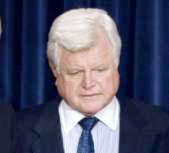
kny_funeral_ted
Senator Ted Kennedy

The Scandal of a Public Mass
There would not have been scandal if instead a private Mass reserved for the relatives of the deceased senator had been celebrated, all the more since he is said to have died assisted with Church sacraments. (Though there is no record of any public statement or gesture by the Senator before dying, in which he rejected his positions opposed to Catholic morals, or any request for forgiveness for having upheld those positions. Not even in his now-released letter to the Pope does he show repentance and ask forgiveness for his attitudes.)1

The scandal really is about the aspect of glorification that the ceremony took on with the presence of the incumbent President and three former Presidents, as well as the Archbishop of Boston, Sean Cardinal O’Malley, numerous clergy, countless politicians, family members and special guests. In addition, the ceremony was televised for the whole world to see.

Gravity of the Sin of Scandal
The sin of scandal is especially grave because of the evil it does to third parties, particularly the weak. The special gravity of the sin of scandal stems from its being the occasion for others to sin, often producing a loss of the faith and consequently causing the risk of eternal damnation.2

Objectively, the public Mass for the deceased Senator Edward Kennedy is a scandal that places at risk the faith of many and strengthens the enemies of the Church. It suggests that a Catholic can publicly and continuously oppose Catholic doctrine, favor and even support positions opposed to Church teachings, and still continue to be seen as a Catholic in good standing and even worse, to deserve funeral honors of a head of state.

In extremely grave times when one sees throughout the world an onslaught to impose laws, customs and practices diametrically opposed to Catholic morals and the natural law (including same-sex “marriage,” abortion and euthanasia), it is extremely sad and grave for religious authorities to glorify a politician whose public life was marked by ignorance of, and even contempt for, the teachings of the Church.

Requiem Mass...
While watching the TV broadcast of the Mass, I could not fail to remember other funeral Masses that I saw in times preceding the cycle of liturgical reforms of the sixties. A comparison can help the reader better understand what happened at the liturgy glorifying the deceased politician.

Back in those times, people still had a very lively notion of the solemnity of death, when the human soul separates from the body and appears before the judgment seat of God, “Who will render to every man according to his works” (Romans 2:6). Likewise, there was still a notion of the gravity of sin and the weakness of man, “for a just man shall fall seven times” (Prov. 24:16). Therefore, the need for divine mercy is clear: “If thou, O Lord, wilt mark iniquities: Lord, who shall stand it?” (Ps. 130:3).

For this reason, the Requiem Mass or Missa pro defunctis (Latin for "Mass for the deceased") was offered to God as a propitiatory sacrifice for the soul of the deceased, imploring God’s mercy upon him. The liturgy was grave and solemn; the vestments, as well as the cloth covering the coffin were black to symbolize the sorrow of separation and the humility of man, aware that he is a sinner. The ambience used to be one of serene sadness, recollection and prayer.

And the Church, through the voice of the priest, raised to God this supplication:

“Requiem æternam dona eis, Domine,
et lux perpetua luceat eis.”

“Eternal rest grant unto them, O Lord,
and let perpetual light shine upon them…”


…or Resurrection Mass?
The funeral mass for Senator Edward Kennedy was completely different.

First of all, according to the main celebrant, Fr. Donald Monan, S.J., it was not a Requiem Mass but a “Mass and resurrection, to commemorate the life of Senator Kennedy.3

A Mass “to commemorate the life of Senator Kennedy” could not fail to become a glorification of the deceased senator, not so distant from a canonization Mass.

At least that was the impression left on those who listened to the homily by Fr. Mark R. Hession, one of the concelebrants, who went so far as to compare the faith of the deceased senator with that of the prophets in the Old Testament: “Ted Kennedy was a public man, with a public faith. His strong suit was a central stream of biblical faith, expressed both in the Hebrew and Christian scriptures.”

Then, he added: “His strong suit was the faith of the great Hebrew prophets of Isaiah, Jeremiah, Amos.” Finally, Fr. Hession insisted: “His public faith was reinforced and nurtured in the Christian scriptures.

A soul’s eternal destiny is a secret known to God alone. My ardent desire is for the senator to have died in God’s friendship and, after purging his faults, to be received in the eternal abode. However, to say that in his public life he bore witness to his faith and was guided by a faith worthy of the Prophets is to ignore notorious facts or, even more grave, to suggest that abortion, homosexual practice and stem cell research are compatible with Catholic doctrine, Revelation and natural law.

Now then, his resolute support for these practices is public and notorious.4


A Liturgy Turned into Ideological Political Preaching

In the Prayer of the Faithful, younger members of the Kennedy family took turns at the ambo to read messages of a politico-ideological note to which the congregation would respond: “Lord, hear our prayer.”

Thus, supporting the insurance health-care reform proposed by President Obama, Max Allen (Kara Kennedy Allen's son) recited:

“For what my grandpa called the cause of his life, as he said so often, in every part of this land, that every American will have decent quality health care, as a fundamental right, and not a privilege, we pray to the Lord.” Congregation: Lord, hear our prayer.”


Even graver was turning a Catholic Mass into a podium for the homosexual movement, as Jack Schlossberg, the son of Caroline Kennedy Schlossberg and grandnephew of the deceased Senator led in prayer:

“For a new season of hope that my uncle Teddy envisioned, where we rise to our best ideals, close the book on the old politics of race and gender, group against group and straight against gay. We pray to the lord.” “Congregation: Lord, hear our prayer.”

No Lack of Jokes and Laughter
Once the Mass was over, the funeral eulogies started. In the text transcribed from the ceremony this observation appears several times between parentheses: “LAUGHTER.” Indeed, the orators interspersed their speeches with jokes to entertain the assembly.

In addition to two sons of the deceased, President Obama spoke. In his speech, Obama praised the Senator’s endeavors on behalf of the poor. But as Kathleen Gilbert pointed out in her article on LifeSiteNews.com, “Obama also alluded to Kennedy's support for ending the ban on open homosexuality in the military, noting his defense of ‘the young soldier denied her rights because of ... whom she loves.’"5

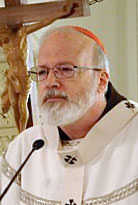
kdy_funeral_cardinal
Cardinal O’Malley

Blessed by a Cardinal of Holy Church
Casting aside the austere Franciscan habit he usually wears, Cardinal O’Malley donned the garb of cardinal to lend prestige to the memory of the deceased senator. Before giving the corpse his last blessing, he stated:

“Mr. President, we thank you for your presence and for your words of appreciation for the life and work of Senator Kennedy. We've gathered here today to pray for a man who has been such an important part of our history and our country.”

Instead, for a Catholic - and a fortiori for a cardinal - “the life” and “work” of Senator Kennedy, his support of abortion, same-sex “marriage” and other aberrations should be the object of criticism rather than of “appreciation.”

Pro-abortion and Pro-homosexuality Organizations Join the Praise for Kennedy

Because of that support, several organizations that promote abortion and the homosexual agenda joined the chorus of praise to the deceased senator from Massachusetts.

Sen. Edward Kennedy's Legacy:
Nancy Keenan, president of NARAL Pro-Choice America, and Andrea Miller, executive director of NARAL Pro-Choice Massachusetts issued a joint statement paying tribute to Sen. Edward Kennedy's legacy of support for women's equality and privacy... "by following his example of moving forward, even against great odds and relentless opposition from opponents of progress."6

Human Rights Campaign Statement on the Passing of Sen. Edward M. Kennedy

The Human Rights Campaign, the nation’s largest lesbian, gay, bisexual and transgender civil rights organization, released the following statement on Senator Edward M. Kennedy’s (D-MA):

“The nation has lost its greatest champion and strongest voice for justice, fairness, and compassion," said Human Rights Campaign President Joe Solmonese. "The loss to our community is immeasurable.”7

The Gay & Lesbian Alliance Against Defamation (GLAAD) Communique
Incoming President of the Gay & Lesbian Alliance Against Defamation (GLAAD) and former Massachusetts State Senator Jarrett Barrios issued the following statement on the passing of Sen. Edward M. Kennedy.

“It is impossible to fully describe the transformative impact of Ted Kennedy in the Senate for lesbian, gay, bisexual and transgender Americans. From the outset, he valued our contributions and supported our equality. In those early years, his support may have turned heads but didn't dampen his support--and eventually helped change hearts and minds about LGBT equality in the Senate and around the country."8

De Mortuis Nil Nisi Bonum... But…
"Let nothing be said of the dead but what is good," the old adage recalls. But this applies, with reservations, to people who live in the private sphere and whose actions and attitudes do not have great influence on public opinion and on the nation’s destiny.

This does not apply to public persons whose wrongdoings are known to all and who therefore should be properly critiqued lest they would influence public opinion in a bad direction and thus have an effect on the nation’s life.

At the same time as we pray for the repose of the soul of the late Senator Edward Moore Kennedy, we offer God reparation for the scandal caused by the funeral commemoration unduly held for him.

____________________________


1Ted Kennedy’s letter to Pope Benedict XVI, and the papal reply,
Sunday, August 30, 2009, : http://www.bostonherald.com/news/kennedy/view.bg?articleid=1194186.

2Cf. Summa Theologica, II-II, q. 43.


3All quotes from the funeral are taken from: "Transcript of Ted Kennedy's Funeral Service," August 29, 2009, By The Kennedy Family, in Real Clear Politics, http://www.realclearpolitics.com/articles/2009/08/29/transcript_of_ted_kennedy_funeral_service_98097.html, August 30, 2009.


4Cf. Kathleen Gilbert, " Pro-Abort, Homosexual, Human Stem-Cell Groups Mourn Loss of "Greatest Champion" Kennedy -- Pressure from Senator caused defeat of Massachusetts True Marriage Amendment," LifeSiteNews.com, http://www.lifesitenews.com/ldn/2009/aug/09082809.html.


5Kathleen Gilbert, Pro-Abortion Kennedy Lauded as "Champion for Those Who Had None" at Funeral Mass, LifeSiteNews.com, Monday August 31, 2009, http://www.lifesitenews.com/ldn/2009/aug/09083101.html.


8http://www.glaad.org/Page.aspx?pid=911.

A Timely Quote from St. John Chrysostom

Should we look to kings and princes to put right the inequalities between rich and poor? Should we require soldiers to come and seize the rich person's gold and distribute it among his destitute neighbors? Should we beg the emperor to impose a tax on the rich so great that it reduces them to the level of the poor and then to share the proceeds of that tax among everyone? Equality imposed by force would achieve nothing, and do much harm. Those who combined both cruel hearts and sharp minds would soon find ways of making themselves rich again. Worse still, the rich whose gold was taken away would feel bitter and resentful; while the poor who received the gold from the hands of soldiers would feel no gratitude, because no generosity would have prompted the gift. Far from bringing moral benefit to society, it would actually do moral harm. Material justice cannot be accomplished by compulsion, a change of heart will not follow. The only way to achieve true justice is to change people's hearts first - and then they will joyfully share their wealth.
-St. John Chrysostom

Tuesday, September 1, 2009

Six More Reasons to Organize and Participate in a Rosary Rally


Who but a saint can put into so few words such a powerful message about the power of the Rosary. If you have been wondering why you should participate or organize a Rosary Rally on October 10th, the answer can be supplied by the words of these Saints. Join us at a Rosary Rally, won't you? Please send us your questions or comments.
*************************************************************************************
"Give me an army saying the Rosary and I will conquer the world"
by Pope Blessed Pius IX

"The Rosary is the most excellent form of prayer and the most efficacious means of attaining eternal life. It is the remedy for all our evils, the root of all our blessings. There is no more excellent way of praying."
by Pope Leo XIII

"The Rosary is a priceless treasure inspired by God."
by St. Louis De Monfort

"Among all the devotions approved by the Church none has been so favored by so many miracles as the devotion of the Most Holy Rosary."
by Pope Pius IX

"The rosary is my weapon."
by St. (Padre) Pio of Pietrelcina

"Our Lady has never refused me a grace through the recitation of the rosary."
by St. (Padre) Pio of Pietrelcina